A common response to critiques of land and ocean food system design is that demand lies beyond the reach of policy. People, it is argued, simply choose what they prefer to eat, and production systems exist to meet those preferences as efficiently as possible. From this perspective, nutrient detours are unfortunate but unavoidable: if consumers want certain products, supply chains must stretch to accommodate them.
(“Food Cycles and Detours” excerpt)
This assumption does not withstand scrutiny. Demand is not a fixed external force; it is continuously shaped by policy, infrastructure, and narrative. Prices, availability, marketing, dietary guidelines, subsidies, and institutional procurement all influence what appears normal, affordable, and desirable. Treating demand as neutral or “natural” obscures the extent to which public choices already structure private preferences.
In food systems, this structuring is particularly pronounced because many of the relevant signals are indirect. Consumers rarely encounter the full cost of nutrient detours embedded in food prices. Environmental impacts are externalised, while subsidies and regulatory frameworks stabilise long and resource-intensive supply chains. At the same time, health narratives often reinforce these patterns by linking specific foods to essential nutrients, without acknowledging that the nutrients themselves originate elsewhere in the system.
The omega-3 case illustrates this dynamic clearly. Public messaging encourages fish consumption to meet nutritional needs yet rarely notes that fish are intermediaries rather than primary sources of omega-3s. This framing supports continued extraction and feed-based production, even as alternative routes exist that would deliver the same nutrients with fewer ecological losses. What appears as consumer choice is thus inseparable from how information and options are curated.
Importantly, demand-shaping is not limited to messaging. Institutional practices — from school meals and hospital catering to military and public-sector procurement — create baseline consumption patterns that ripple through markets. Trade policies and food safety regulations further entrench specific product categories, making some forms of consumption frictionless while rendering others marginal or experimental. In this context, preserving existing demand is itself a policy choice, not a neutral default.
By treating demand as immutable, sustainability debates shift responsibility onto individuals while leaving systemic design untouched. Calls for personal dietary change are at odds with large-scale investments aimed at reproducing the same consumption patterns through ever more complex supply chains. The result is a paradox: societies are urged to eat more responsibly, even as policies actively work to ensure that familiar products remain abundant, cheap, and detached from their ecological origins.
Recognising demand as manufactured does not imply coercion or the need for prohibition. Rather, it highlights the scope and potential for intentional redesign. If policy already shapes demand implicitly, it can do so explicitly in ways that reduce nutrient detours and environmental costs instead of increasing them. Aligning health guidance, procurement standards, and innovation incentives with cycle-oriented nutrient flows would change what is normalised — not by restricting choice, but by redefining the defaults around which choice is exercised.
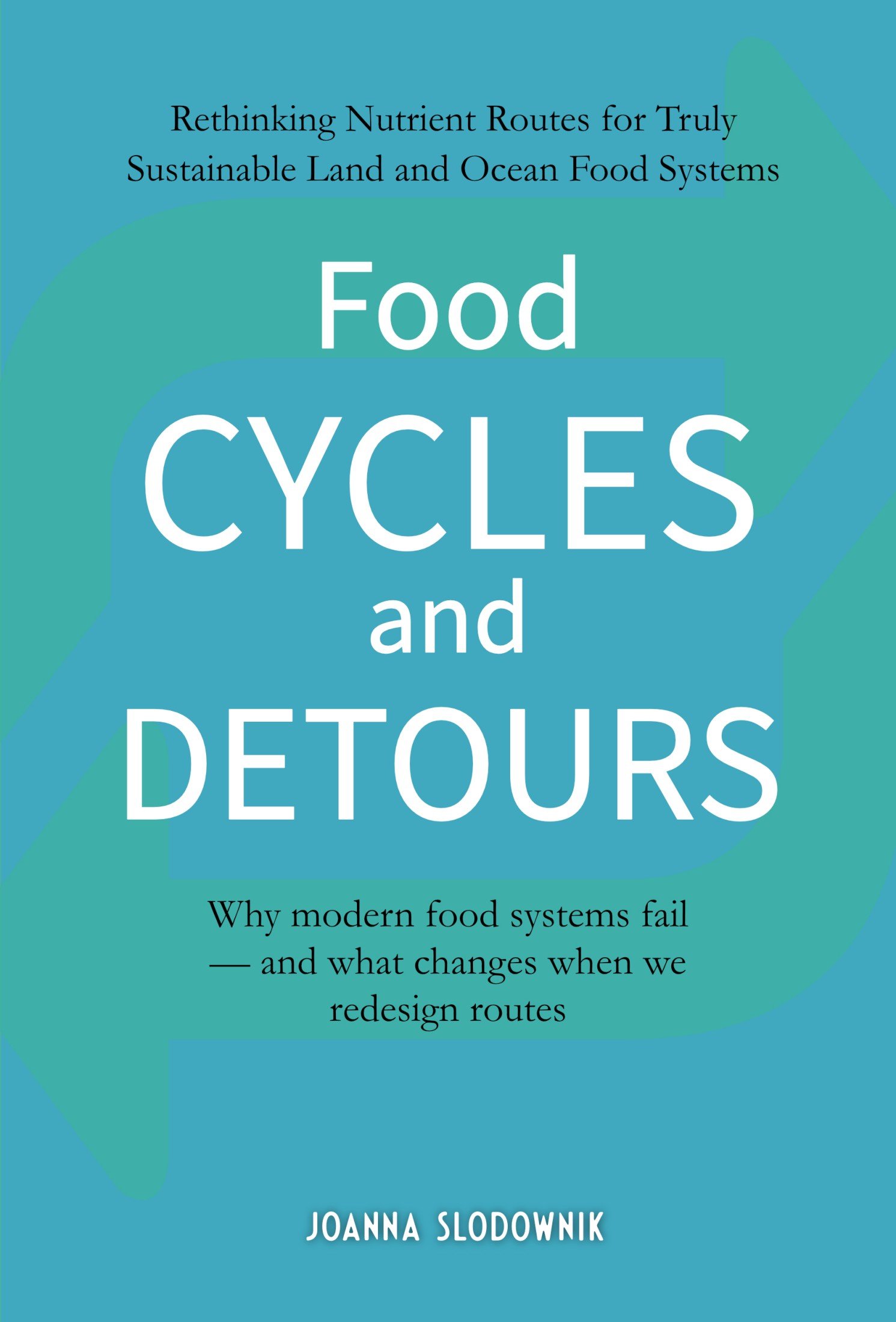
Download the full “Food Cycles and Detours – Why Modern Food Systems Fail” (download or read in the browser) or read now via this link: https://read.bookfunnel.com/read/3tlg70bsne
(This link will open your book in Book Funnel cloud reader)