Detour Case Study: Omega-3, Fish Feed and the Ocean (excerpt)
Few examples illustrate the logic of nutrient detours as clearly as the contemporary production and distribution of omega-3 fatty acids. Omega-3s are widely – and rightfully so – promoted as essential for human health, associated with cardiovascular function, cognitive development, and anti-inflammatory processes. Public health guidance in many countries encourages increased consumption of fish largely on this basis. Over time, omega-3s have become cognitively fused with fish in public understanding, while their true biological origin in marine algae has largely disappeared from view — a fact that often surprises even well-informed consumers. The dominant routes through which omega-3s reach human diets reflect and solidify this striking disconnect between nutritional goals and ecological pathways.
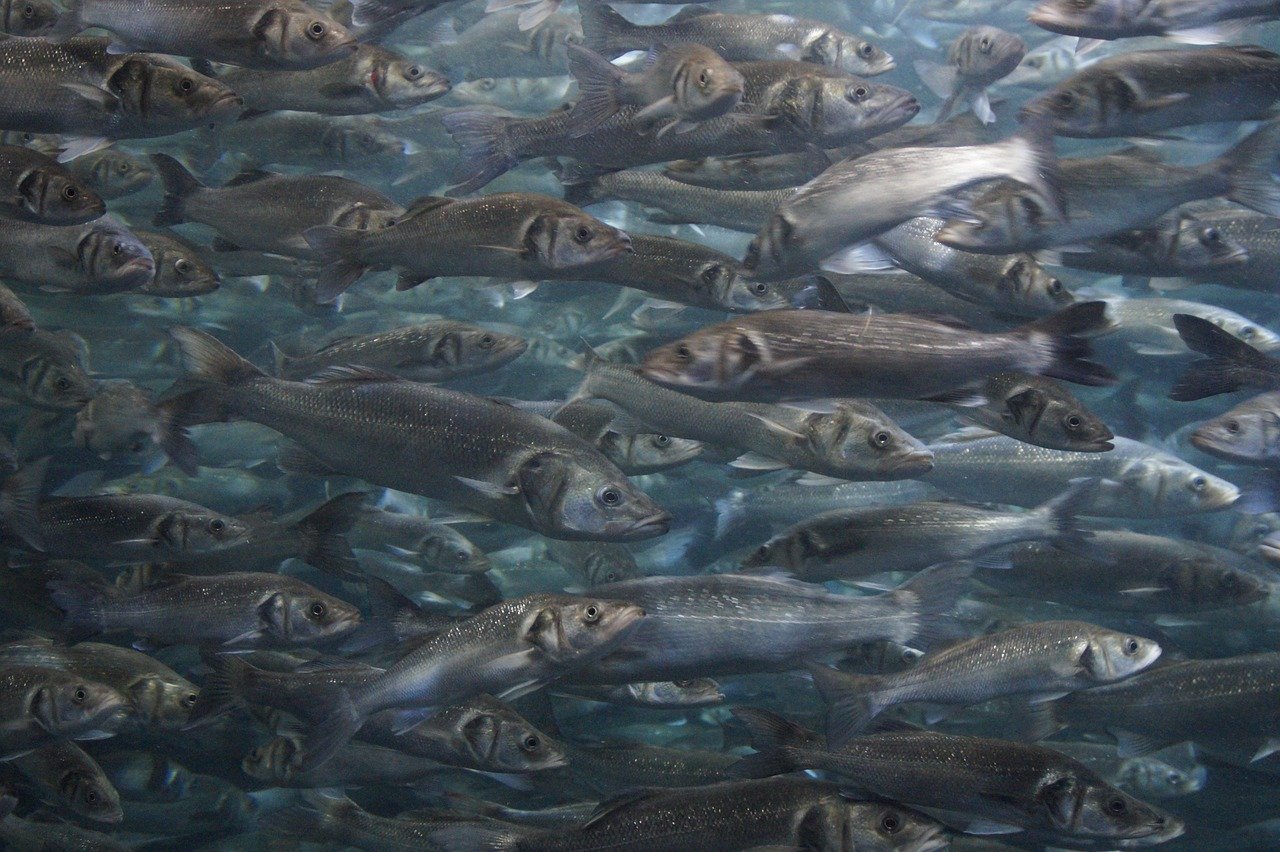
At the base of the omega-3 cycle are marine microorganisms, particularly algae, which synthesise long-chain omega-3 fatty acids such as EPA and DHA. Fish do not produce these nutrients themselves; they accumulate them by consuming algae directly or indirectly through the food web. From a cycle-oriented perspective, this would suggest relatively direct routes from primary producers to human consumption. Instead, contemporary systems have constructed a series of increasingly long detours.
A substantial share of wild-caught fish is reduced into fishmeal and fish oil, which are then used as feed inputs for farmed fish and some land animals that are themselves marketed as rich sources of omega-3. In parallel, many aquaculture systems rely on species that, depending on feed composition, may deliver limited omega-3 content to consumers despite their “healthy” reputation.
The result is a multi-step routing of nutrients:
algae → wild fish → processed feed → farmed fish → human diets.
Each stage of this pathway introduces losses and pressures. Wild fish stocks are harvested not primarily for direct human nutrition, but as intermediaries in feed production. Ecosystems are depleted to sustain farmed production that is justified in part by the very nutrients being removed upstream. While individual steps may meet sustainability criteria — regulated fisheries, improved feed conversion ratios, certification schemes — the overall route remains largely unexamined as a single system.
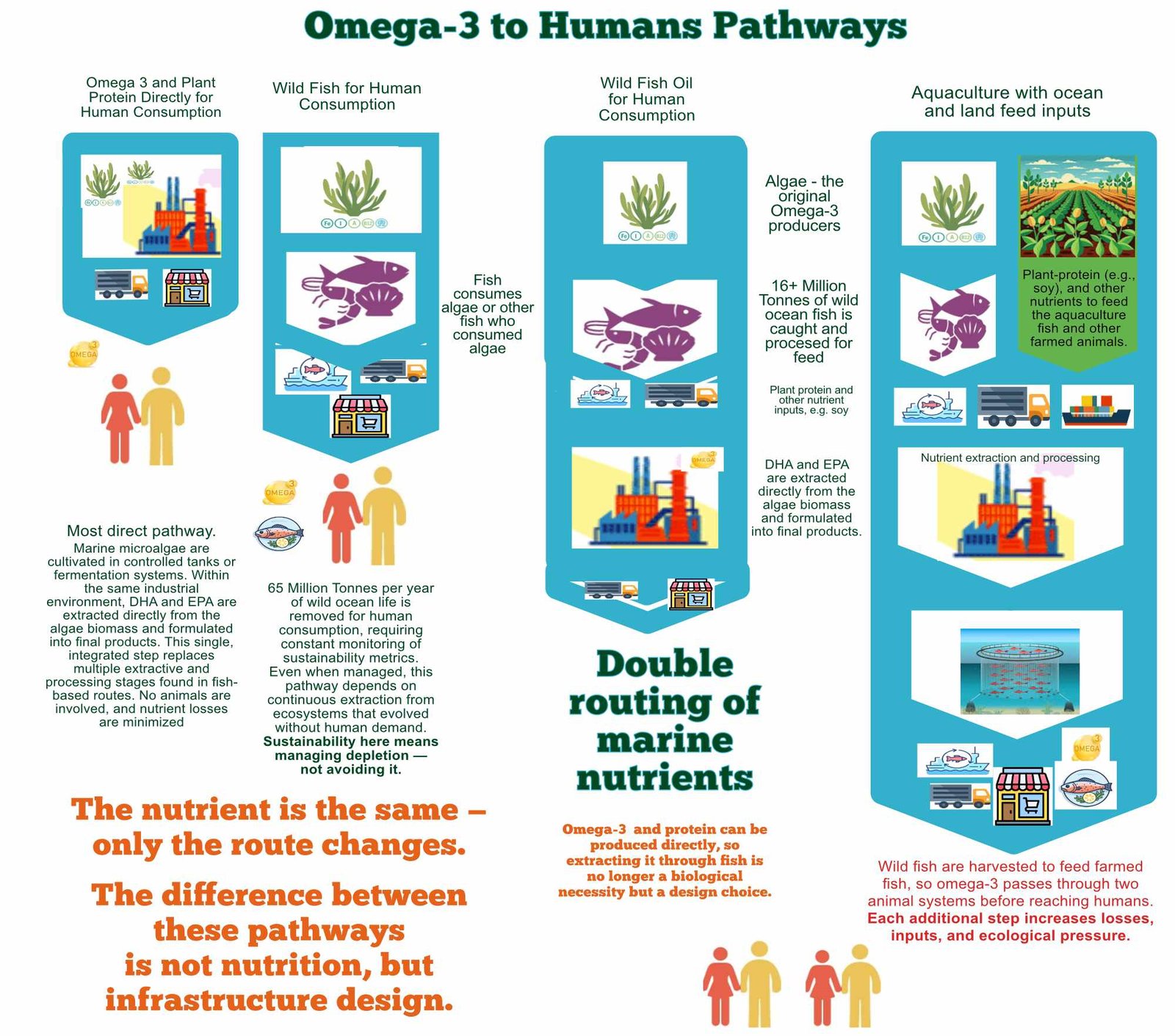
This detour persists not because it is the most efficient way to deliver omega-3s, but because it preserves familiar consumption patterns and market structures. Fish remains framed as the “natural” carrier of omega-3 fatty acids, even as the biological origin of the nutrient is displaced from public discourse. Alternatives that bypass the detour — such as direct algal omega-3 production for human consumption or feed — exist and are already deployed in niche contexts. Yet they are generally treated as supplements or marginal innovations that cater to limited consumer segments and specialized niche markets, rather than as signals that the dominant route itself may be misdesigned.
From a policy perspective, this architecture creates blind spots. Ocean governance frameworks tend to separate fisheries management, aquaculture regulation, feed sourcing, and public health guidance into distinct domains. Nutrient flows across these domains are rarely tracked in aggregate. As a result, the large-scale removal of omega-3s from marine ecosystems — through the harvesting of immense volumes of pelagic fish, krill, and other keystone ocean life that underpin marine food webs — can be justified under one policy lens as an input for aquaculture feed, while increased fish consumption is promoted under another as a public-health objective, without acknowledging the contradiction or the growing risk this poses to the stability and resilience of ocean ecosystems. Moreover, this pathway is often presented and championed as the “right,” sustainable, and affordable choice, despite the fact that many of the ecological risks embedded in the extensive extraction of foundational marine organisms are only incompletely evaluated, inconsistently reported, or excluded from formal sustainability metrics altogether.
The omega-3 case thus exemplifies how detours become stabilized through institutional fragmentation. What appears as sustainable intensification within individual sectors may, at the system level, represent a net amplification of pressure on oceans. The key issue is not whether aquaculture or fisheries can be improved incrementally, but whether continuing to route essential nutrients through long biological and industrial chains — despite the availability of more direct alternatives — is compatible with long-term ocean resilience.
Viewed through the lens of cycles versus detours, omega-3 production highlights a broader pattern: nutrients are increasingly extracted from ecosystems to recreate them later in forms deemed acceptable to consumers. The ecological cost of maintaining this familiarity is borne upstream, where losses and risks are diffused and rendered invisible. Making these detours explicit is a necessary step toward rethinking how ocean sustainability, human nutrition, and food security are jointly governed.
Download the full “Food Cycles and Detours – Why Modern Food Systems Fail” (download or read in the browser) or read now via this link: https://read.bookfunnel.com/read/3tlg70bsne
(This link will open your book in Book Funnel cloud reader)