Palm oil is not just an environmental story
Palm oil is usually discussed as an environmental problem: deforestation, orangutans, biodiversity loss, certification, sustainable sourcing, corporate pledges and consumer guilt. All of these issues matter, and none of them should be minimized. But palm oil also reveals something deeper about the modern food system: the way a basic nutrient — fat — can become part of a vast industrial infrastructure, routed through global supply chains, concentrated in specific regions, embedded in thousands of products, and treated as an invisible input in the machinery of modern consumption.
In other words, palm oil is not just an ingredient. It is a nutrient pathway. And in many ways, it is a detour.
For most of human history, fats came from many places. Different regions relied on different sources: olives, nuts, seeds, grains, fruits, coconuts, sesame, rapeseed, sunflower, animal fats and many other local foods. These systems were shaped by climate, ecology, agriculture and culture. They were not perfect systems, but they were diverse systems. Modern industrial food production changed the question. Instead of asking which fats belong to which landscapes, diets or regional food cultures, the system increasingly asked: which fat is cheapest, most stable, most versatile and easiest to standardize?
Palm oil answered that question almost perfectly.

By MONUSCO Photos – Photo MONUSCO/Abel Kavanagh, CC BY-SA 2.0, Link
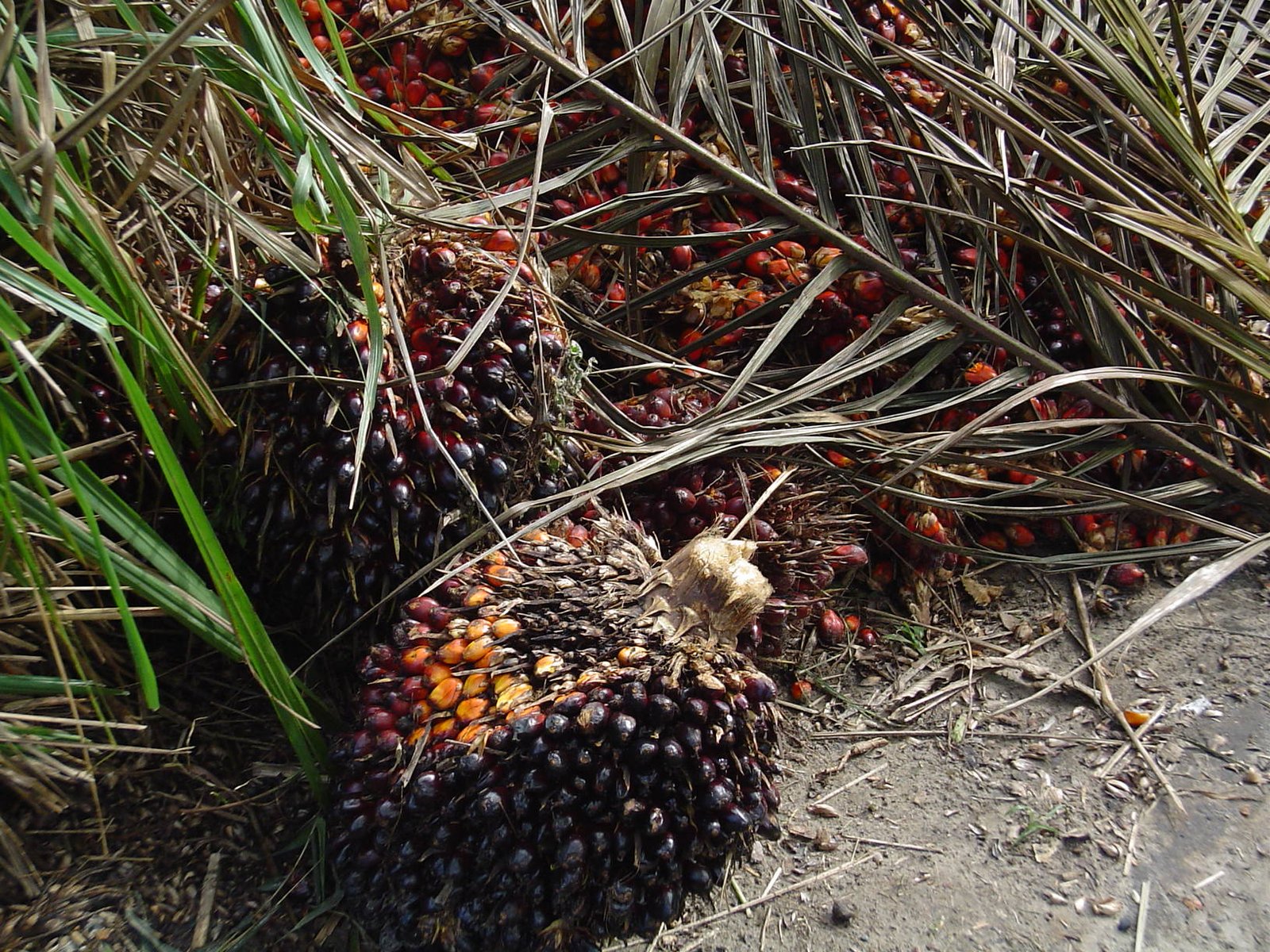
The uncomfortable truth: palm oil is useful
Palm oil is highly productive, functionally useful and remarkably adaptable. It is semi-solid at room temperature, stable under many processing conditions and useful in processed foods, baked goods, spreads, snacks, cosmetics, soaps, detergents, animal feed and industrial applications. From the point of view of industrial formulation, palm oil is an extraordinary ingredient.
This is where the conversation becomes difficult, because palm oil is not useless, and it is not simply a luxury ingredient with no social value. It is food. It is cooking oil. It supports livelihoods. In many producing regions, oil palm cultivation is connected to income, employment, rural infrastructure and development. For millions of people, palm oil is not an abstract environmental controversy debated by distant consumers; it is part of daily life, agricultural practice and economic survival.
That is why a simplistic anti-palm-oil narrative is not enough. The problem is not that the oil palm exists. The problem is what the global food and consumer-goods system has asked it to become.
The problem is not the plant. It is the pathway.
Oil palm does not have to mean the clearing of native forests. In theory, production could be directed toward already cleared or degraded land, with strong protections for forests, peatlands, biodiversity and local communities. But too often, expansion has followed a more destructive route: native forests cleared, peatlands drained, monocultures expanded, habitats fragmented and local communities placed under pressure from land conflicts and industrial development.
This is the real controversy. Palm oil can be efficient, but efficiency inside a destructive land-use system is not enough. Palm oil can be productive, but productivity does not justify replacing complex ecosystems with monoculture plantations. Palm oil can support livelihoods, but livelihoods should not depend on a system that destroys forests, wildlife and long-term ecological resilience. And palm oil can feed people, but when edible oils are increasingly routed into ultra-processed products, cosmetics, industrial uses and biofuels, we have to ask a deeper question: are we using this resource where it matters most, or have we allowed a valuable food crop to become another industrial detour?
A detour is not simply a long supply chain. A detour is a route that makes a basic nutritional or functional need dependent on unnecessary concentration, ecological pressure and industrial lock-in. The palm oil pathway looks something like this: tropical land becomes plantation; plantation becomes commodity oil; commodity oil becomes ingredient; ingredient disappears into thousands of products around the world. On paper, this looks efficient. From a systems perspective, it is fragile.
The illusion of efficiency
One reason palm oil is so difficult to discuss is that both sides of the debate can be partly right. Palm oil is often defended because it produces more oil per hectare than many other oil crops, and this argument is not irrelevant. If palm oil were simply replaced with lower-yielding crops, land pressure could shift elsewhere. A careless boycott could create new problems instead of solving old ones.
But that does not mean the current system is wise. A high-yield crop can still create a fragile and damaging system if it concentrates risk, depends on long supply chains, drives land conversion, displaces biodiversity and makes entire industries dependent on one dominant input. Yield is one metric. It is not the whole story.
The deeper question is not simply: which crop gives us the most oil per hectare? The deeper question is: what kind of fat system are we designing?
This matters because the global economy has not merely chosen palm oil as one useful fat among many. It has built an enormous routing system around it. A growing share of global fat demand is satisfied through a narrow biological and geographic base, while the ecological burden is concentrated in specific tropical regions and much of the value is captured elsewhere — by manufacturers, brands, retailers and global supply chains.
Certification is not the same as redesign
The usual palm oil debate often asks whether palm oil can be certified, whether plantations can be monitored, whether yields can be improved and whether deforestation can be reduced. These are important questions, and better governance matters. But they mostly ask how to manage the detour better. They rarely ask whether so much of the world’s fat demand should be routed through this detour in the first place.
This is why certification alone cannot be the whole answer. A certified detour may be better than an uncertified one, but it may still leave the underlying architecture intact: concentrated production, long supply chains, high dependency on one crop, pressure on land and a global industrial appetite for cheap, functional fats. In other words, certification may reduce harm, but it does not necessarily redesign the system.
A more serious conversation would ask which uses of palm oil are essential, which are avoidable, which could be served by regional crops, which are driven mainly by ultra-processed food and consumer-goods expansion, and which might eventually be served by new technologies that do not require the same land-use pressures.
The new question: can fat pathways be redesigned?
For decades, there were few easy alternatives. Palm oil has a functional profile that is difficult to replace at scale, and other vegetable oils can shift pressure to other ecosystems. Many industries became technically and economically locked into palm oil because it solved multiple formulation problems at once. This lock-in is precisely why the issue cannot be reduced to individual consumer choice.
But the landscape is beginning to change. New technologies, including microbial fats, precision fermentation and other forms of controlled-environment lipid production, are starting to challenge the assumption that industrial fats must always come from land-intensive monocultures. These technologies are not a magic solution, and they will not replace agriculture. They also require energy, infrastructure, regulation, investment and careful assessment. But they create something food systems have lacked for a long time: optionality.
Optionality matters because it allows us to stop treating the current pathway as inevitable. If some fats can be produced closer to where they are used, or designed for specific functional purposes without relying on a single tropical crop, then the dominance of palm oil becomes less of a technical necessity and more of a political and economic choice.
At that point, palm oil is no longer just a sourcing problem. It becomes a policy question.
From substitution to system design
A more intelligent fat system would not begin with the question: how do we replace palm oil everywhere? That question is too narrow, and it can lead to bad answers. A better question is: how do we design a more diverse, resilient and ethical system for producing and using fats?
That system would likely include many routes. Some fats would still come from agriculture. Some would come from regional oil crops. Some uses could be reduced through better product design and dietary shifts. Some functional fats might eventually come from microbial production or fermentation. Some landscapes should never be converted at all. Some resources should be prioritized for food rather than fuel or disposable consumer goods.
The goal is not purity. The goal is resilience.
Palm oil shows us how modern food systems often create abundance by building detours: long, concentrated and extractive routes that appear efficient until their ecological and social costs become impossible to ignore. But systems that were designed can be redesigned, and fats may be one of the places where this redesign becomes visible first.
Europe’s opportunity
This is where Europe should pay attention. If Europe wants to lead a serious food-system transformation, it should not only ask what consumers eat. It should ask how nutrients move, where value is captured, where ecological pressure accumulates and which routes can be shortened, diversified or replaced.
That means treating fats not merely as commodities, but as part of strategic food-system infrastructure. It means connecting agricultural policy, food innovation, biotechnology, public procurement, sustainability standards, consumer health and industrial strategy. It means asking whether Europe can build new nutrient pathways that are less extractive, less fragile and less dependent on ecological sacrifice elsewhere.
Palm oil is not the whole story. But it is one of the clearest examples of the story we need to start telling.
Food is not just food. It is infrastructure. And the way we produce, route and use basic nutrients may become one of the defining questions of the next food-system transformation.
Download the full “Food Cycles and Detours – Why Modern Food Systems Fail” (download or read in the browser) or read now via this link: https://read.bookfunnel.com/read/3tlg70bsne
(This link will open your book in Book Funnel cloud reader)